
Malabar mushrooms
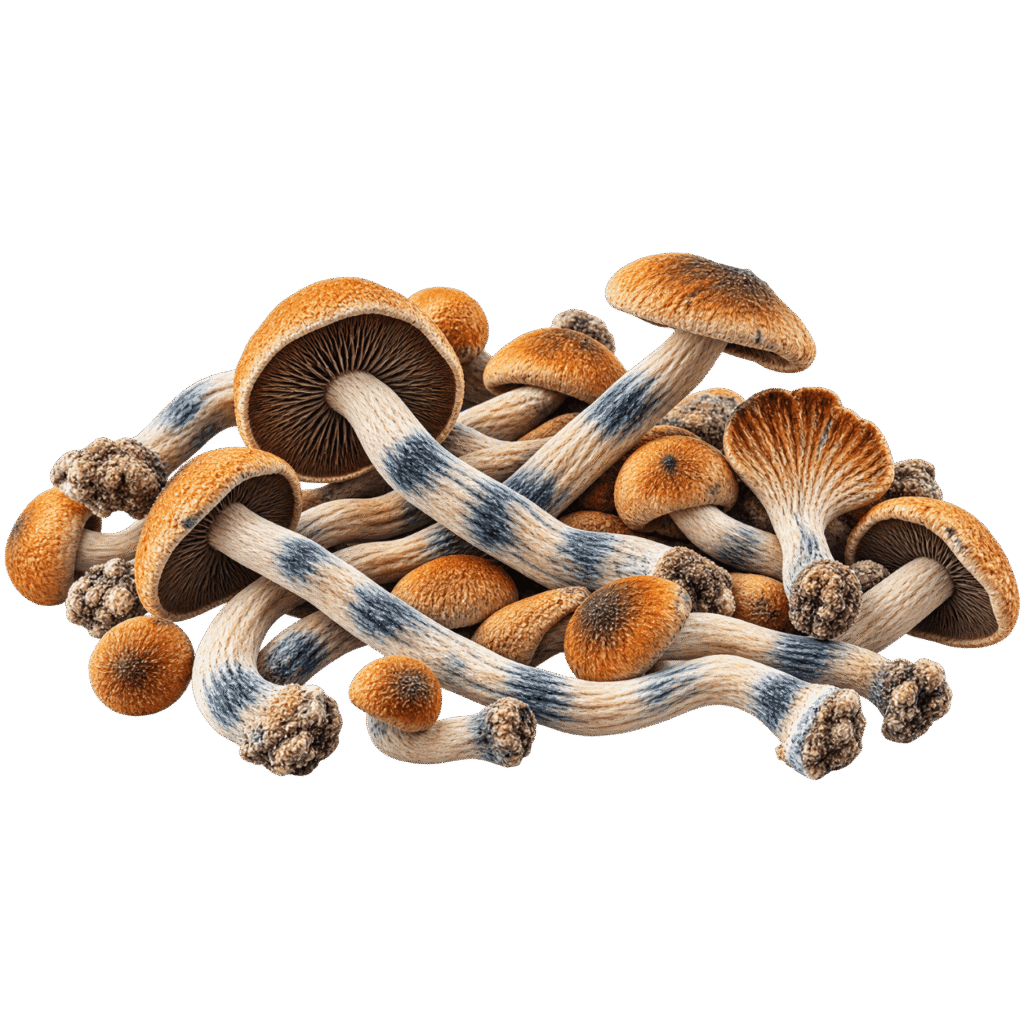
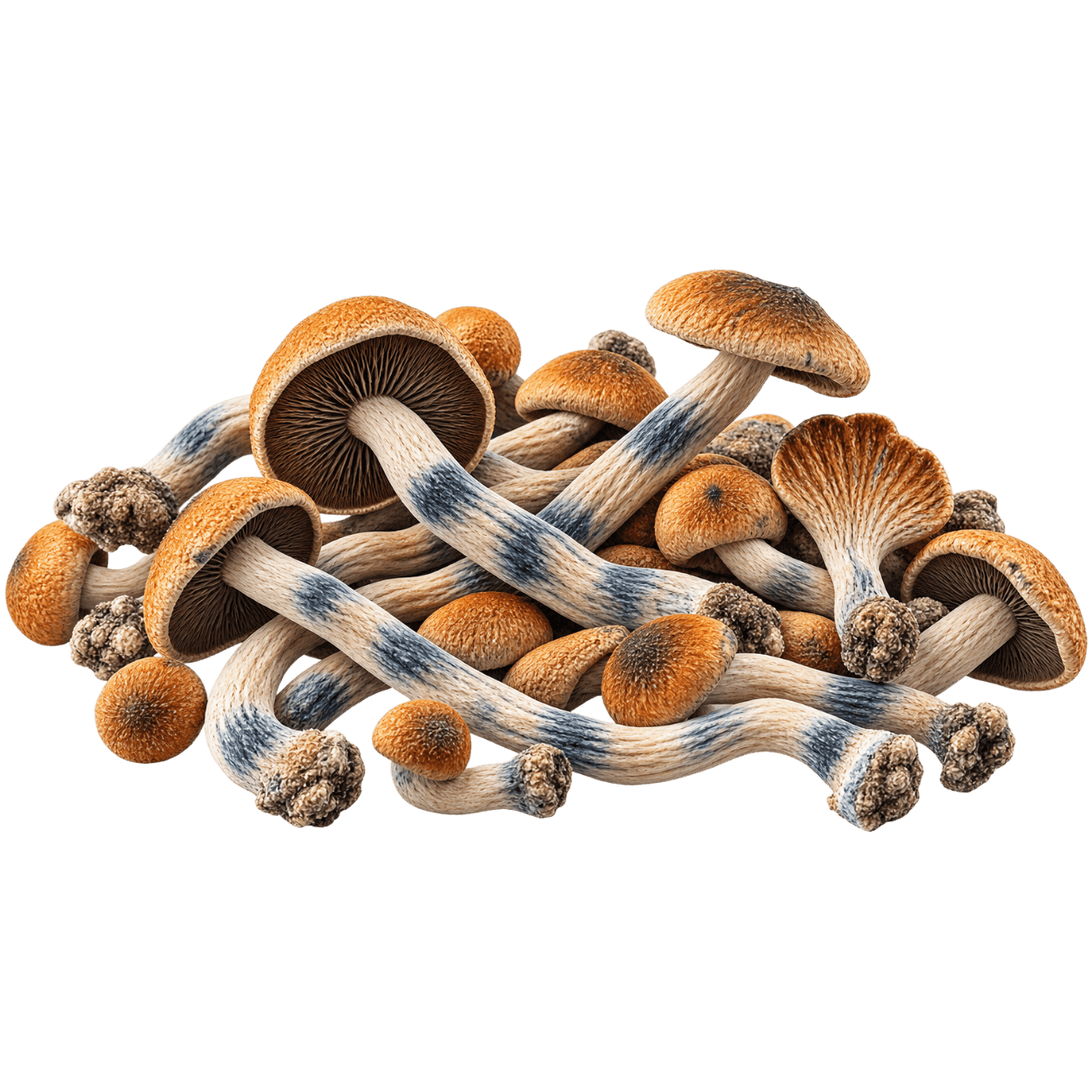
Malabar mushrooms are a cultivated Psilocybe cubensis lineage associated with southwestern India. They commonly develop sturdy pale stems and warm golden-to-brown caps, giving mature fruits a substantial appearance.
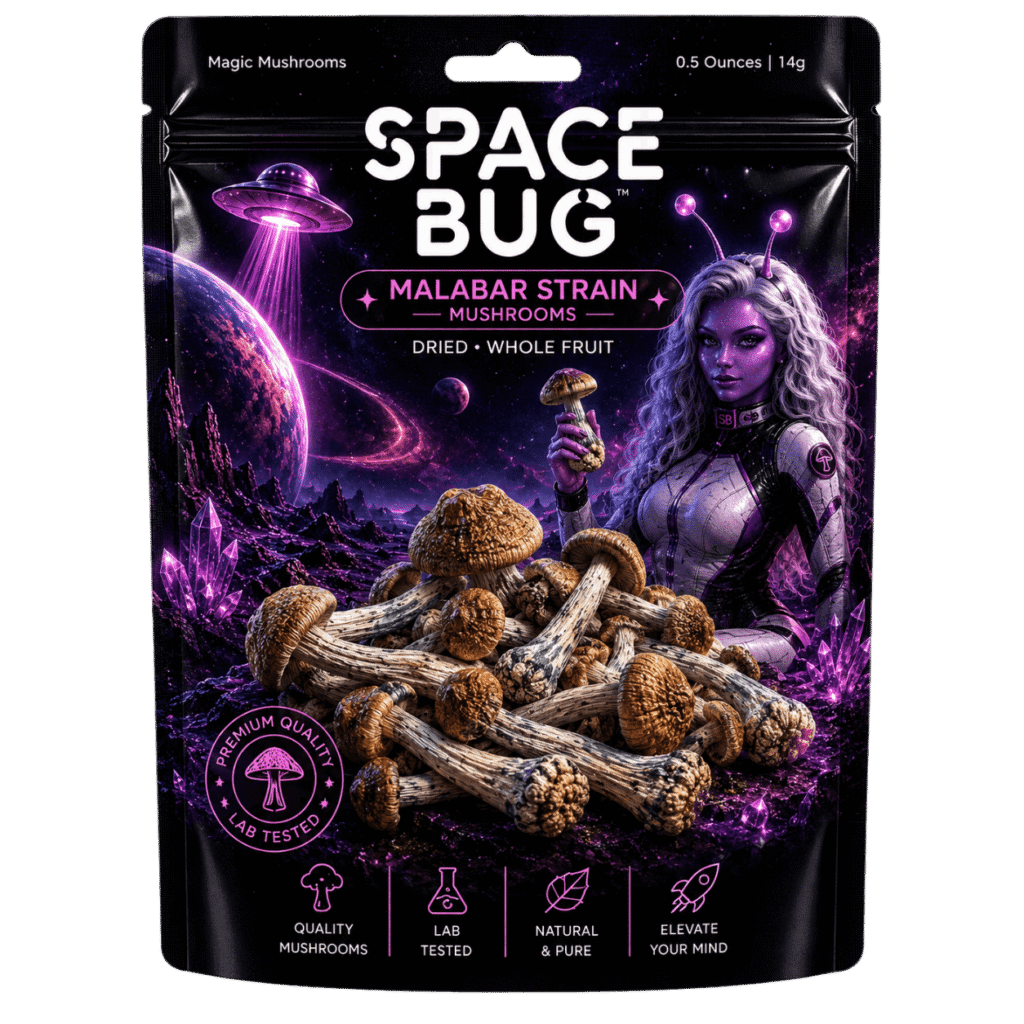
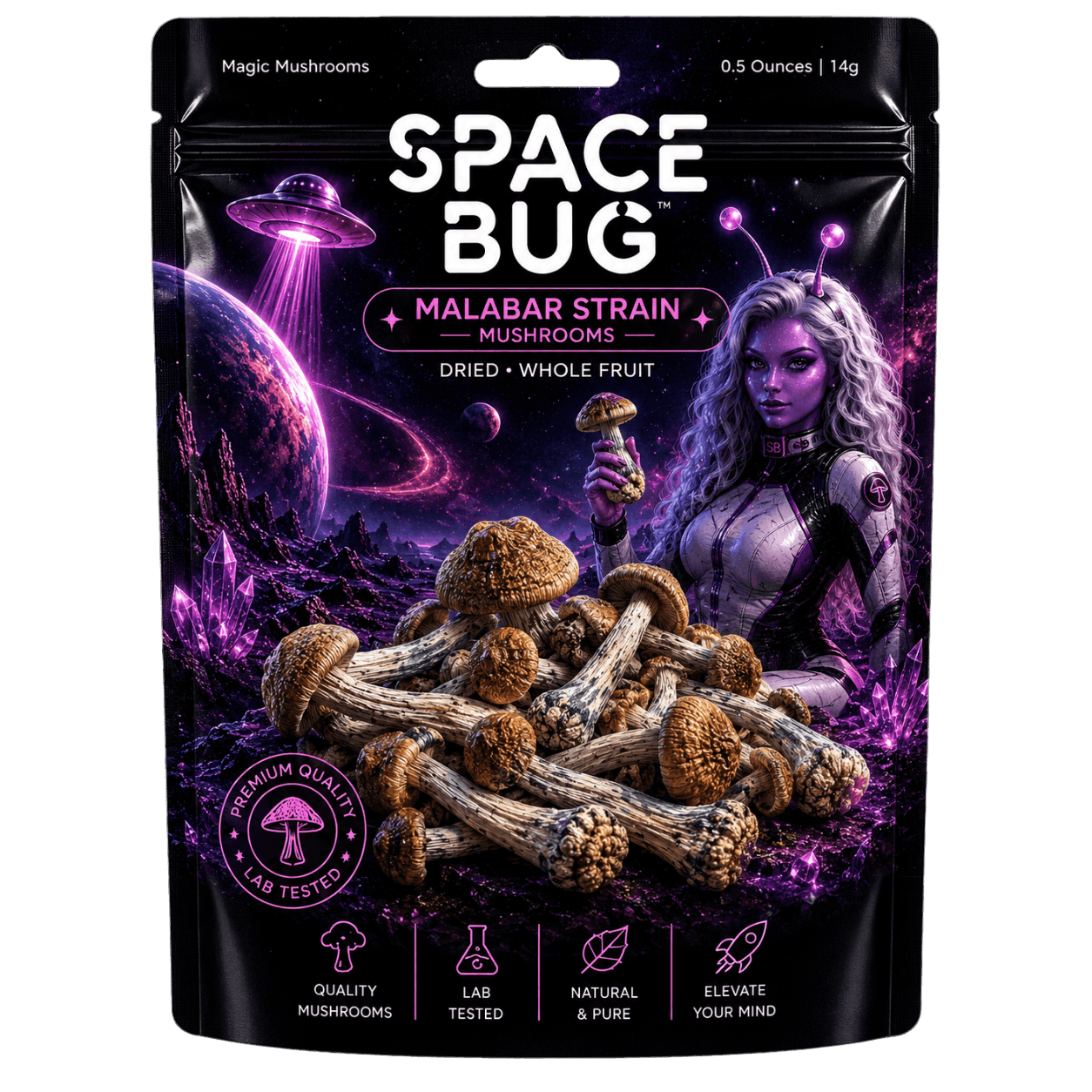
Space Bug offers Malabar mushrooms as traditionally dried whole fruit. During dehydration, the mushrooms lose moisture and contract. As a result, their texture becomes firmer and denser while the individual caps, stems and natural variations remain visible.
What makes Malabar mushrooms distinctive?
Malabar belongs to Psilocybe cubensis, a species found across tropical and subtropical environments. Within that species, cultivators use names such as Malabar to distinguish particular cultivated genetic lines.
The Malabar line has long been associated with robust growth. In particular, mature fruiting bodies can develop substantial stems supporting caps that broaden considerably as they open.
However, Malabar mushrooms do not follow one fixed shape. Some fruits remain compact, while others develop broader caps or thicker stems. Growing conditions and natural biological variation can influence these characteristics.
Furthermore, commercial mushroom cultivar names are not standardized scientific classifications. Different Malabar selections may therefore share a common cultivation history without producing completely identical mushrooms.
Psilocybe cubensis
Traditionally dried
What effects are associated with Malabar mushrooms?
Malabar mushrooms contain psilocybin and psilocin. These psychoactive compounds can temporarily alter visual perception, sensory processing, emotional state, thought patterns and the subjective perception of time.
For example, colours may appear more vivid and patterns can become unusually noticeable. Shapes, distances or surfaces may also seem different. In addition, sounds and other sensory information can feel more prominent.
Changes in thought and emotion are also possible. Some people report heightened curiosity, introspection or emotional intensity. However, these experiences vary considerably and are not exclusive to the Malabar cultivar.
Malabar has sometimes been described in mushroom communities as moderate to comparatively strong. Nevertheless, controlled analytical evidence does not establish one consistent potency for Malabar mushrooms. Psilocybin concentration can vary between individual fruits and batches.
Psilocybin can also produce unwanted effects. These may include anxiety, confusion, nausea, dizziness or uncomfortable changes in thought, perception and emotion.
Reports about Malabar mushroom effects describe individual experiences. They cannot predict the potency, intensity or outcome of a particular mushroom.
Malabar mushroom experience
Perception
Visual & sensory changes
Emotion
Mood & emotional intensity
Thought
Introspection & altered time perception
How Malabar mushrooms change as they mature
Young Malabar mushrooms generally begin with rounded caps supported by pale stems. As the fruiting body develops, the cap expands and can become noticeably broader.
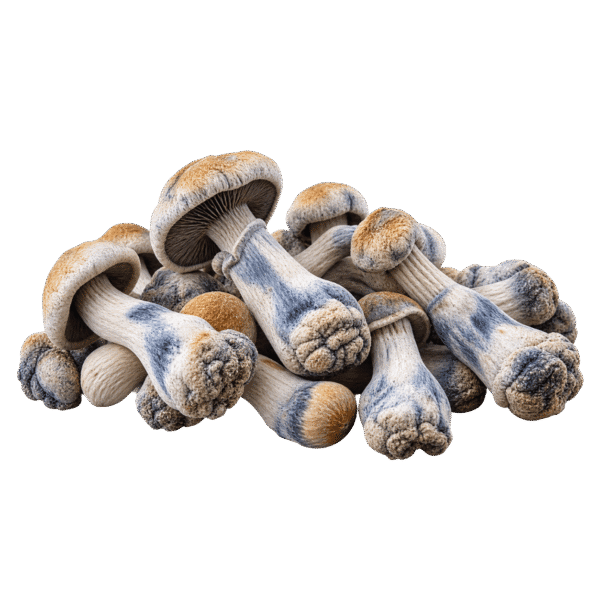
Mature caps often show warm shades of gold, tan and brown. Their shape can range from gently convex to comparatively flat. Meanwhile, the stems can remain thick and substantial relative to the expanded cap.
The partial veil can also leave visible traces as the mushroom matures. After it separates from the cap, remnants may remain around the upper stem. However, the appearance of this feature varies between individual fruits.
Blue or blue-green marks can develop after physical pressure damages the mushroom tissue. This bruising occurs across many psilocybin-containing mushrooms. However, its intensity cannot reliably indicate how much psilocybin a mushroom contains.
Because Space Bug keeps the fruiting bodies whole, these differences remain visible in the finished dried product.
What happens when Malabar mushrooms are dried?
Fresh mushrooms contain a high proportion of water. Therefore, traditional dehydration produces a substantial physical transformation as moisture gradually leaves the fruiting body.
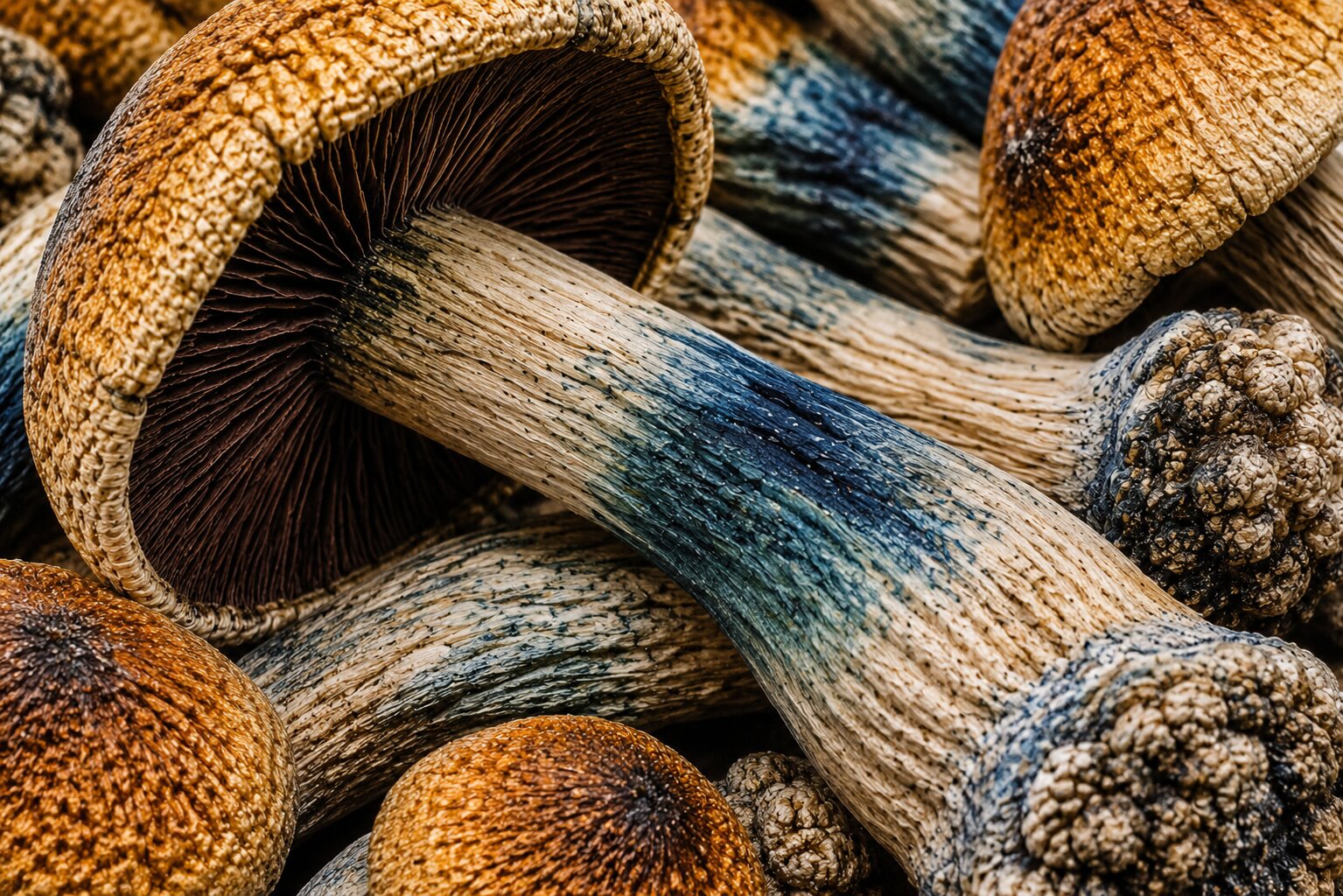
The thick stems associated with Malabar mushrooms contract during this process. Their surfaces become more wrinkled and fibrous, while the stems themselves become lighter and considerably firmer.
Caps change as well. They lose volume and can curl, fold or become more textured around the edges. Golden and brown pigmentation may also appear darker once the mushroom has dried.
Consequently, traditionally dried Malabar mushrooms look more compact than fresh or freeze-dried fruit. Freeze drying tends to retain more volume because frozen water leaves through sublimation, while conventional dehydration allows the mushroom tissue to contract.
After drying, keeping moisture away becomes important. Store the mushrooms properly sealed in a cool, dry environment and protect them from direct sunlight and excessive heat.
Drying changes the mushroom’s physical structure. However, size, colour and dried appearance cannot reliably determine potency.
Why are they called Malabar mushrooms?
The Malabar name refers to the Malabar Coast along southwestern India. Cultivation archives have historically associated this Psilocybe cubensis line with mushroom material collected in that region.
The geographic connection is plausible because Psilocybe cubensis occurs in tropical and subtropical environments, including parts of South Asia. However, the commercial cultivar does not have a complete publicly documented genetic pedigree linking every modern Malabar line to one original specimen.
Over time, cultivators reproduced and selected these genetics outside India. Different selections could therefore develop slightly different characteristics while continuing to circulate under the Malabar name.
For this reason, the geographic name provides useful historical context, but it should not be treated as a guarantee that all modern Malabar mushrooms are genetically identical.
Malabar mushroom characteristics
Robust fruiting bodies
Malabar mushrooms commonly develop substantial stems that remain one of the cultivar’s most recognizable physical characteristics.
Broad mature caps
Caps can expand considerably as the mushrooms mature, developing golden, tan and brown pigmentation.
Natural variation
Stem thickness, cap shape, colour and overall proportions naturally differ between individual whole-fruit mushrooms.
Dense dried texture
Traditional dehydration contracts the fruiting body. As a result, the finished mushroom becomes firm, compact and naturally textured.
Malabar mushrooms at a glance
- Variety
- Malabar
- Species
- Psilocybe cubensis
- Geographic association
- Malabar Coast, southwestern India
- Format
- Whole fruit mushrooms
- Drying method
- Traditional dehydration
- Cap appearance
- Golden tan to brown
- Stem appearance
- Pale, thick and substantial
- Bruising
- Blue coloration may occur
- Dried texture
- Firm and compact
- Storage
- Cool, dry place
Malabar is a cultivated Psilocybe cubensis lineage historically associated with southwestern India. Individual mushrooms and commercial genetic selections can vary in appearance.
IMPORTANT INFORMATION
Safety, age requirements and legal notice
Age requirement
This product is intended for adults aged 19 and older.
Warnings
- Do not drive, cycle or operate machinery after consumption.
- Keep locked away and out of reach of children and pets.
- Do not combine with alcohol, cannabis or other psychoactive substances.
- Do not use while pregnant or breastfeeding.
- Do not use if the packaging is damaged or the contents appear altered.
- Consult a qualified healthcare professional before use if you take prescription medication or have a physical or mental health condition.
Legal notice
Laws and regulations concerning psilocybin-containing mushrooms vary by jurisdiction. Customers are responsible for understanding and complying with the laws applicable where they live.
Nothing on this page constitutes legal or medical advice.
This product is not intended to diagnose, treat, cure or prevent any disease.

Reviews
There are no reviews yet.